Opinion
Why Paper Loyalty Cards Don't Work Anymore
You've printed hundreds of them. Your customers have lost hundreds of them — usually in the same wallet that contains an expired Blockbuster card. Here's why the paper stamp card is costing you regulars, and what actually works in 2026.
Published · Updated
In short
Paper loyalty cards don't work because customers lose them (39% of paper loyalty card holders abandon the program for this reason alone), they're trivial to forge with a generic rubber stamp, they generate zero customer data, and they cost you a recurring print bill for a program you can't even measure. Digital loyalty cards solve all four problems at once.

The paper loyalty card was a great idea — in 2005
The concept is sound: reward repeat customers and they'll keep coming back. Loyalty programs increase visit frequency by 20-30% when they work. The problem isn't the concept — it's the medium.
Paper cards made sense when everyone carried a wallet full of cards. But behaviour has changed. People tap to pay, leave their wallet at home, and carry nothing but a phone. A paper stamp card doesn't fit into that world anymore.
The four problems with paper
They get lost
50–70% of loyalty cards are never redeemed — not because customers don't want the reward, but because the card has been swallowed by a couch or laundered into pulp. A customer with 6 stamps who washes their jeans does not start over. They quietly disengage and start cheating on you with the place across the street.
Zero data
You don't know how many active loyalty customers you have, how often they visit, when they last came in, or whether frequency is increasing. You're running a loyalty program with the dashboard equivalent of a tea towel.
Fraud is trivial
Anyone with a vaguely correct rubber stamp can fake a paper card, and eBay sells the generic ones for the price of a small latte. It only takes a handful of self-stamping regulars to make the program unprofitable.
Ongoing cost
Cards, stamps, ink pads, replacement stamps after one mysteriously goes home in a barista's apron. It's not huge, but it's recurring and annoying — especially for a program you can't actually measure.
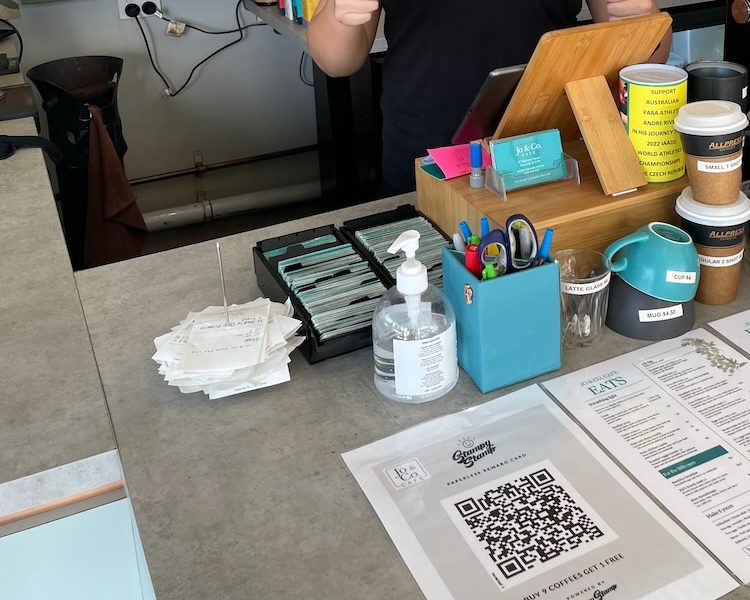
What actually works: QR code loyalty
The replacement for paper stamp cards is already in your customer's pocket: their phone.
- 1You put a QR code at the counter (print it once, done).
- 2Customers scan it with their phone camera — no app to download.
- 3You approve the stamp from your dashboard.
- 4The stamp appears on their digital card instantly. Their phone remembers their progress.
What this fixes
- No more lost cards. The loyalty card lives on their phone. It's always there.
- Full visibility. You can see every customer, every visit, every stamp.
- No fraud. Every stamp requires your approval. No one can stamp themselves.
- No ongoing cost. Print a QR code once. Done.
What your customers see
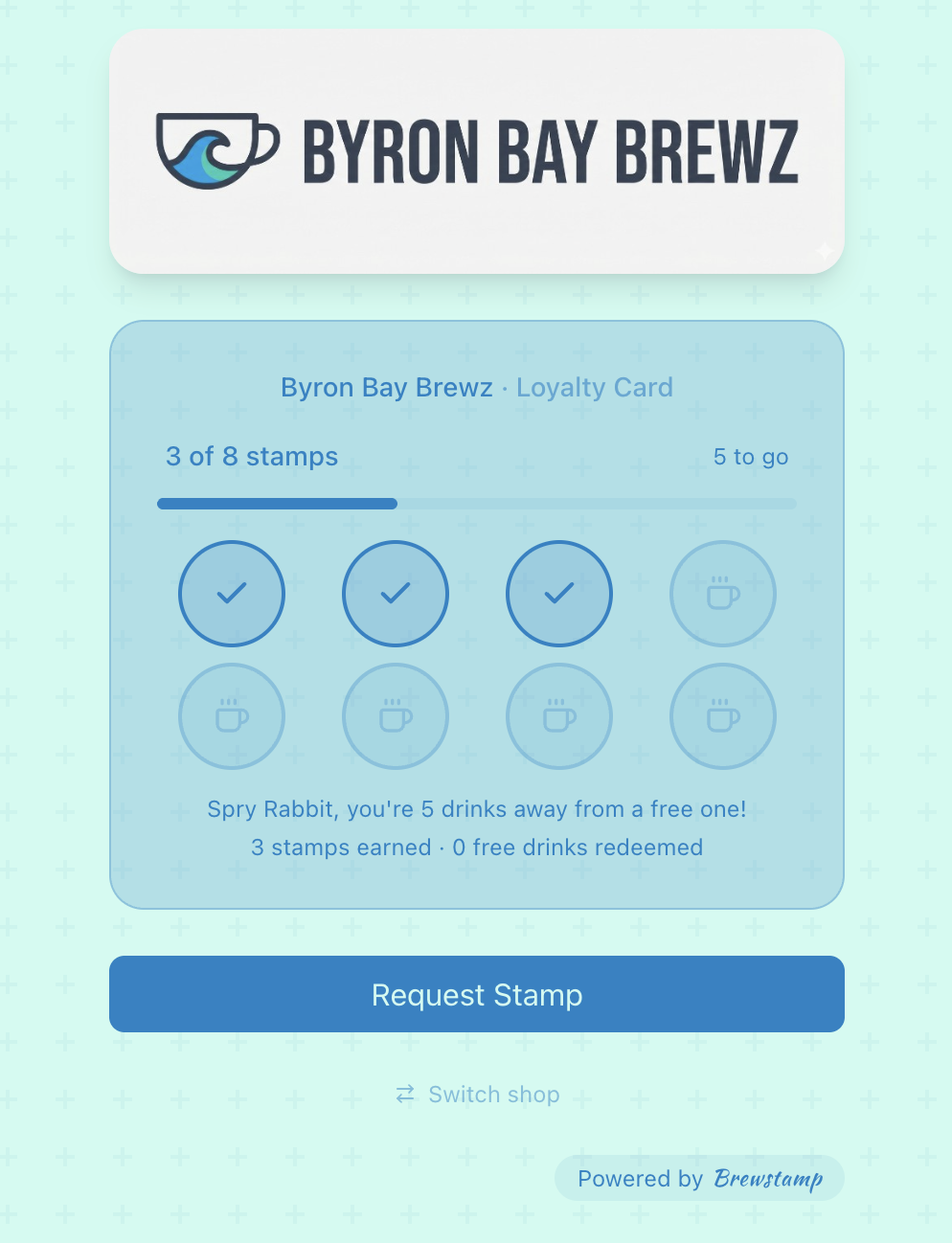
"But won't customers miss the physical card?"
This is the most common concern — and the answer is no. Nobody has ever cradled a damp punch card and whispered "you and me, we've been through a lot". Customers don't love paper cards; they tolerate them. What they love is the free coffee. Give them a faster way to earn it and they'll switch without blinking.
The first time a customer scans a QR code and sees their stamp appear in real time on their phone, the paper card feels ancient. It's the same feeling as the first time you tapped to pay instead of inserting your card.
Making the switch
You don't need a dramatic cutover. The hardest part is picking a digital platform — here's how the common cafe loyalty apps compare. Once you've picked one, this is the simplest rollout:
- 1Set up a digital loyalty card (takes about 2 minutes).
- 2Print the QR code and put it at the counter alongside your existing paper cards.
- 3Have your baristas mention it: "We've gone digital — scan that QR code and your stamps are saved on your phone."
- 4After a week or two, once most regulars have switched, stop restocking the paper cards.
Most cafes find that within 2 weeks, 80%+ of their loyalty customers have moved to digital — without any push.
Paper loyalty cards FAQ
Are paper loyalty cards still effective?+
Less than they used to be. Industry data shows roughly 39% of paper loyalty card holders abandon the program because they misplace the card, and 50–70% of paper cards are never redeemed. Digital loyalty cards retain virtually all of their members because the card lives on the customer's phone.
Why do paper stamp cards get lost so often?+
They compete with credit cards and IDs for limited wallet space, they don't survive a wash cycle, and most customers don't carry a wallet at all anymore. A loyalty card pinned to a fridge magnet is a card that never makes it to the cafe.
Can paper loyalty cards be faked?+
Easily. Any rubber stamp roughly the right shape will do, and generic stamps cost a few dollars on eBay. Without merchant approval at the moment of stamping, paper loyalty cards have effectively no fraud protection.
What's the best replacement for paper loyalty cards?+
A digital loyalty card the customer accesses by scanning a QR code at the counter — no app required. The customer's stamps live on their phone, the merchant approves each stamp from a dashboard, and the cafe gets visibility into who their actual repeat customers are.
Do customers prefer digital loyalty cards over paper?+
In most cases, yes. Customers don't love paper cards — they tolerate them. What they want is the reward. Switch to digital and most regulars adopt it within a single visit, especially if there's no app to install.
How much does it cost to switch from paper to digital?+
Less than the paper cards typically cost. Most digital loyalty card platforms have a free tier; paid plans for small cafes run around $5–10/month — usually less than what you spend on printed cards and stamp pads in a year.